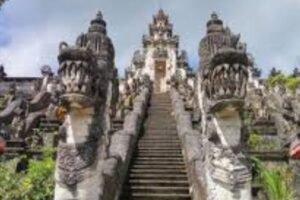
Nestled in the heart of Bali, Indonesia, Tirta Empul Temple is a significant spiritual site renowned for its sacred springs and ritual purification practices.
Located near the town of Tampaksiring, this temple is surrounded by lush green trees making it a beautiful destination for both tourists and devotees.
The temple’s geographical positioning not only enhances its aesthetic appeal but also reflects the harmonious relationship Balinese culture shares with nature.
Tirta Empul, which translates to “holy water spring,” plays a crucial role in the spiritual practices of the Balinese people. Built in 962 AD during the Warmadewa dynasty, it is believed that the founding of this temple was initiated by a high priest who discovered the natural springs, reputed for their healing and purifying properties.
The temple complex is designed in accordance with traditional Balinese architecture, featuring intricately carved stone structures and vibrant decorations, which are vital for conducting rituals and ceremonies.
The significance of Tirta Empul Temple extends far beyond its beautiful architecture and serene surroundings. It serves as a central place of worship for Balinese Hindus who come to partake in the sacred water purification rituals.
Visitors are often captivated by the sight of locals and travelers alike stepping into the holy waters, which are meticulously divided into various purification pools. Each pool corresponds to specific prayers and intentions, making this site not just a tourist attraction, but a profound spiritual experience.
As a testament to its cultural and spiritual heritage, Tirta Empul continues to thrive as a focal point for both ritualistic gatherings and mystical exploration, attracting individuals seeking deeper connection with their spirituality and the vibrant traditions of Bali.
Tirta Empul Temple Entrance Fee
Tirta Empul Temple, one of Bali’s most iconic spiritual sites, welcomes visitors to explore its serene atmosphere and cultural heritage. Effective January 1, 2025, the entrance fee has been updated to IDR 75,000 for adults, IDR 50,000 for children aged 5 to 12, and free for children under 5.
This fee is essential to maintain the temple’s beauty, ensure its preservation, and support ongoing renovations. Visitors can visit the temple daily from 8:00 a.m. to 6:00 p.m., with tickets available at the entrance.
History of Tirta Empul Temple

Tirta Empul Temple, nestled in the lush landscapes of Bali, boasts a rich historical tapestry that dates back to the 10th century. It is believed to have been founded by the revered King Sri Gunung, who is often credited with the temple’s creation after experiencing a series of visions.
These visions led to the discovery of a sacred spring within the temple complex, which is revered for its healing properties and purifying waters.
The temple holds great significance in Balinese Hindu culture, encapsulating the intricate relationship between spirituality and nature. According to local legend, the waters of Tirta Empul were created by the god Indra, who produced the spring to purify his troops during a battle against the demon Mayadanawa.
This event underscores the temple’s enduring symbolism of purification and healing, making it a pilgrimage site for those seeking spiritual rejuvenation. Throughout its history, Tirta Empul Temple has remained a focal point of religious activity and community gatherings.
It is not only a site for ceremonies and rituals but also a reflection of Balinese identity. Various key historical figures have contributed to its legacy, including the renowned priest Nirartha, who is said to have enhanced the temple’s spiritual aura during his visits in the 16th century.
The temple underwent extensive renovations during the 1960s, further solidifying its status among Bali’s sacred sites. As part of the Bali heritage, Tirta Empul Temple symbolizes the continuity of worship practices and the preservation of local traditions.
It serves as a reminder of the resilience of Balinese culture amid modernization. Its historical importance continues to attract scholars, historians, and tourists alike, ensuring that the legacy of Tirta Empul remains vibrant and relevant in today’s world.
Architectural Features of the Temple
The Tirta Empul Temple, located in the central highlands of Bali, is renowned for its unique architectural features that embody the cultural and religious significance of Balinese Hinduism.
The temple complex is thoughtfully laid out, encompassing a series of courtyards that lead visitors through various spiritually enriching zones.
Entering the temple, one is immediately struck by the intricate design of the main shrine, or ‘pelinggih,’ which is typically adorned with elaborate stone carvings and offerings that reflect both the artistic tradition of Bali and the temple’s sacred purpose.
The temple’s central water source, which feeds into the purification baths, is flanked by beautifully carved stone walls that illustrate scenes from Hindu mythology.
These carvings not only serve an aesthetic purpose but also hold deep symbolic meanings, often depicting gods, goddesses, and mythical creatures central to Balinese culture.
The use of natural stones and vibrant colors in these elements showcases the craftsmanship of local artisans, further enhancing the temple’s grandeur.
The layout of Tirta Empul is traditional, based on the ‘Asta Kosala-Kosali’ principles of Balinese architecture, which emphasize harmony with nature.
This balance is reflected in the alignment of the temple structures with the surrounding lush landscape, incorporating elements of water and greenery that are vital in spiritual practices.
The placement of the bathing pools, emerging from the spring, is particularly significant, symbolizing eternal life and purity. As worshippers immerse themselves in these sacred waters, the design promotes a profound connection between the physical and spiritual realms.
Overall, the architectural features of Tirta Empul Temple not only showcase meticulous artistry but also communicate the profound spiritual essence of the site, embodying the deep-rooted traditions of Balinese Hinduism.
The Sacred Spring Water
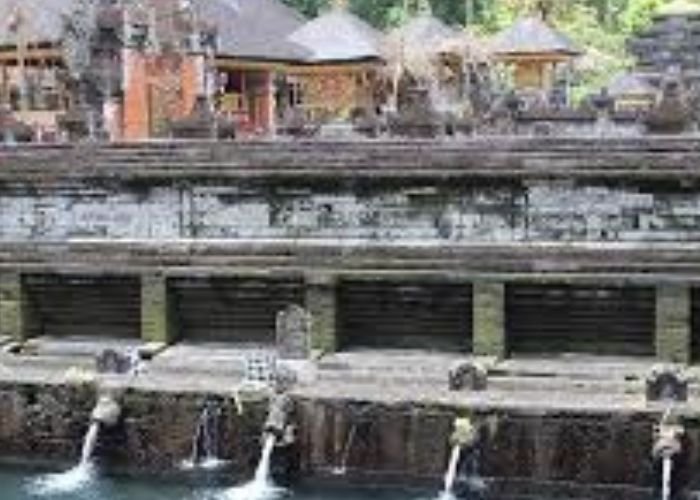
The Tirta Empul Temple, situated in the central region of Bali, is renowned for its sacred spring water, known as “Tirta.” This water emerges from a natural spring, which is considered a divine gift by the local Balinese Hindus.
The origins of this water are rooted in ancient folklore and mythology, often associated with the Hindu God Indra, who is believed to have created it to restore life to his troops after a fierce battle.
Consequently, the spring water at Tirta Empul Temple embodies both a spiritual and historical significance, making it a focal point for worship and rituals.
Cultivated within the pristine surroundings of lush greenery, the water flows through a series of purification pools, where devotees and visitors partake in traditional cleansing rituals.
These rituals involve immersing oneself in the holy water, which is believed to confer spiritual purification and healing. Participants often express profound feelings of renewal and clarity during these ceremonies, emphasizing the transformative power attributed to the sacred spring.
The water is not just seen as a physical element but as a conduit for spiritual enlightenment and a connection to the divine. During visits to the temple, many individuals recount their experiences of engaging in the purification process.
They describe how the ritual, carried out in tandem with specific prayers and mantras, instills a deep sense of peace and tranquility. Moreover, the act of participating in these rituals fosters a collective sense of community, as both locals and tourists come together to share in this sacred practice.
The importance of the spring water in Balinese Hindu rituals cannot be overstated, as it serves to reinforce cultural identity and the continuation of rich religious traditions, embodying the essence of what it means to seek purification and connection with the divine.
Purification Rituals at Tirta Empul
The purification rituals performed at Tirta Empul Temple are a vital aspect of Balinese spiritual life, reflecting both individual devotion and communal engagement.
These rituals are centered around the sacred springs of the temple, believed to possess healing properties and to purify the mind, body, and spirit.
The process begins with devotees preparing themselves, often involving a period of fasting and meditation to mentally and spiritually ready themselves for the experience they are about to undertake.
Upon arrival at the temple, participants typically don traditional attire, often consisting of a sarong and a sash, as a sign of respect and reverence.
The main purification rite involves submerging in the holy water, which is channeled through a series of spouts within the temple complex. Each spout is considered to have a unique significance, addressing various aspects of spiritual and physical purification.
Devotees line up at each spout, performing specific prayers and rituals as they cleanse themselves, believing that the water washes away sins and negative energy.
The materials used in these rituals are deeply symbolic. Offerings of flowers, fruits, and incense are presented at altars, serving as tokens of gratitude and devotion to the deities.
Such offerings embody the relationship between the community and the divine, facilitating a form of communication and connection through sacrificial acts.
Local priests, who are crucial in orchestrating these rituals, carry a significant role in guiding participants, reciting prayers, and ensuring that the rituals are performed correctly.
Their deep understanding of sacred traditions helps foster a sense of balance and harmony within the community. Overall, the purification rituals at Tirta Empul Temple are not merely individual acts but a communal celebration of faith, unity, and renewal.
Through these practices, the local community reinforces their cultural identity and spiritual beliefs, ensuring the continued relevance of these rituals in modern times.
Cultural Significance of Tirta Empul Temple
Tirta Empul Temple, located in the central region of Bali, holds profound cultural significance for the Balinese community. This sacred site serves as a vital spiritual center, where locals and visitors alike engage in the purifying rituals associated with its holy waters.
The temple is deeply intertwined with the Balinese Hindu belief system, acting as a place of worship where devotees seek blessings and healing through the sacred bathing rituals conducted in its pools.
Furthermore, Tirta Empul is characterized by its magnificent architecture and the vibrant symbolism present in its various structures, which reflect the rich cultural heritage of Bali.
The temple also plays a pivotal role during various festivals and ceremonies that are integral to Balinese culture.
Events such as Galungan, Kuningan, and other important religious festivals often see large gatherings of community members who come to participate in rituals intended to show gratitude to the deities.
These gatherings not only foster a sense of community but also reinforce the shared values and beliefs that define Balinese identity. As such, Tirta Empul acts as a focal point for communal spirituality and cultural expression, where traditions are carefully preserved and passed down through generations.
In addition to its spiritual role, Tirta Empul Temple significantly contributes to tourism and cultural exchange. It has emerged as a popular destination for both domestic and international travelers seeking to experience Balinese culture firsthand.
The influx of visitors presents opportunities for intercultural dialogue and deeper appreciation of Balinese traditions. While tourism helps sustain the local economy, it has also prompted ongoing discussions regarding the conservation of cultural practices amidst the challenges posed by modern influences.
Thus, Tirta Empul Temple stands not only as a spiritual sanctuary but also as a living symbol of Bali’s ongoing cultural narrative.
Visitor Experience: What to Expect
Visiting Tirta Empul Temple in Bali is an enlightening journey, offering a unique blend of spiritual and cultural experiences. To enhance your visit, it is advisable to plan your trip during the early morning hours or late afternoon.
These times typically see fewer crowds, allowing for a more serene experience during purification rituals and temple exploration.
Additionally, accessing the site early can provide an opportunity to witness the beauty of the temple’s surroundings illuminated by the soft morning light.
Dress appropriately when participating in the temple’s sacred ritual of purification. Visitors are expected to wear traditional sarongs and sashes, which can often be rented on-site if you are not equipped with your own.
Modesty is highly regarded in Balinese culture, so ensure that your attire covers your shoulders and legs. During the ceremonial bathing, it is customary to enter the purification pools barefoot, enabling a deeper connection with the sacred waters.
Etiquette plays a significant role at Tirta Empul Temple. Visitors should maintain a respectful demeanor, refraining from loud conversations and disruptive behavior.
Photography is generally permitted; however, it is important to ask for permission before capturing images of worshippers or ceremonial proceedings. Furthermore, it is advisable to avoid stepping directly over offerings placed on the ground, as this is considered disrespectful.
To maximize your experience, consider exploring nearby attractions after your temple visit. The charming village of Ubud is just a short drive away, known for its lush rice terraces, arts, and crafts markets.
The awe-inspiring Gunung Kawi Temple or the stunning Tegenungan Waterfall are also worth considering, offering additional opportunities for cultural immersion.
With proper planning and etiquette, your visit to Tirta Empul Temple will be a transformative experience, deeply rooted in Balinese spirituality.
Challenges Facing Tirta Empul Temple
Tirta Empul Temple, a pivotal spiritual site in Bali, faces a myriad of challenges that threaten its integrity and preservation. One of the most pressing issues is environmental degradation.
Increasing pollution in the surrounding areas, primarily due to inadequate waste management practices, poses a significant risk to the purity of the spring water, which is central to the temple’s rituals.
Stakeholders are increasingly concerned that without effective measures to address this problem, the cultural and spiritual significance of Tirta Empul could diminish over time.
Another considerable challenge is the impact of tourism. The temple attracts thousands of visitors each year, which can strain the local infrastructure and disrupt the sanctity of the site.
The influx of tourists often leads to overcrowding, creating a less-than-ideal experience for both visitors and worshippers. Moreover, the commercialization of sacred practices can dilute the spiritual essence that Tirta Empul embodies.
It is essential for local authorities to develop sustainable tourism strategies that balance the needs of visitors with those of the local community and the temple’s custodians.
Efforts to protect Tirta Empul have begun to emerge at community and government levels. Local initiatives aimed at promoting environmental awareness are being established to mitigate pollution and preserve the natural beauty surrounding the temple.
Additionally, the Indonesian government has implemented policies that encourage responsible tourism, ensuring that both visitors and locals respect the sacred nature of the site.
Collaboration between community organizations, environmental groups, and governmental bodies is vital to ensure that Tirta Empul Temple endures as a place of worship and a cultural heritage site.
Addressing these challenges requires concerted efforts from all stakeholders involved.
Conclusion: The Lasting Legacy of Tirta Empul
Tirta Empul Temple, with its venerable traditions and rich cultural heritage, stands as a testament to Bali’s deep spiritual roots. This sacred site, famous for its holy spring water, plays a pivotal role in the spiritual lives of the Balinese people and visitors alike.
Throughout this blog post, we have delved into the temple’s historical significance, architectural beauty, and the critical role it plays in local religious practices.
The temple’s water, believed to possess purifying properties, attracts countless devotees who seek healing and blessings. The rituals performed at Tirta Empul serve not only as a means of worship but also as a vibrant expression of Balinese culture.
Each element, from the ceremonial bathing to the offerings presented at the water springs, encapsulates the profound relationship the community has with their deities and the natural environment.
This harmonious coexistence reflects the values of spirituality and respect for nature that are intrinsic to Balinese life. As we reflect on the enduring significance of Tirta Empul Temple, it is essential to highlight the importance of preserving such cultural landmarks.
The temple is not merely an architectural marvel; it is a living symbol of Bali’s heritage and identity. Each visitor to Tirta Empul is encouraged to approach the site with respect and reverence, acknowledging its spiritual importance and the rich traditions upheld by the local community.
By doing so, we contribute to the lasting legacy of this sacred location, ensuring that future generations can continue to experience and appreciate its spiritual and cultural richness.